2018-10-18 | Bridgestone Team
Winter Driving Safety Tips
As the weather turns cold, are you prepared to face the hazards of winter driving? Drivers should brush up on their winter driving skills each year and remember these easy winter driving tips.
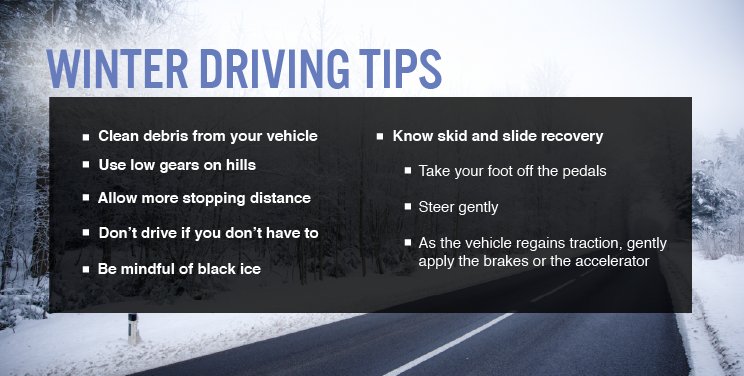
Clean all debris from your vehicle
Before you get behind the wheel, it’s important to remove all snow and ice from the windshields, windows, tops, and sides of your vehicle – yes, all of it! Don’t forget to clear any ice blocking your exhaust pipe lest fumes leak back inside the vehicle.
Use low gears on hills
Low gears offer more traction on hills. Vary your speed and gear use very deliberately in winter weather to maximize traction and minimize the possibility of slides or skids. This also means you should almost never use cruise control on snow or ice.
Drive slowly and allow more stopping distance
Even with snow tires, your vehicle may require more distance to stop than it would in dry conditions. A good rule of thumb is to allow three times the amount of stopping distance in snow or ice than on a dry road. Excessive speeds make it difficult to achieve this. Don’t stop if you don’t have to, especially on hills. The more often you have to start moving from a complete stop, the more often you risk getting stuck.
Don’t drive if you don’t have to
If you don’t have to drive in the snow, don’t. It’s dangerous. However, if there’s just no other option, stay focused on the road and be prepared for unexpected hazards. Check the weather forecast, too. Knowing the conditions you’re likely to encounter can help you prepare accordingly.
Be mindful of black ice
It might look like a puddle, but it isn’t. It’s ice. And it can cause you to lose control. Remember that if a road looks slick, there’s a good chance it is. Maintain a slow speed and test any possible black ice patches by turning your wheels slightly or lightly applying the brakes.
Know skid and slide recovery procedures
Whether you’re in a front-wheel or rear-wheel skid, the following procedures will help you regain control of your vehicle:
- Take your foot off the pedals. Neither the accelerator nor the brake will help you in a skid. If anything, they could make it worse.
- Steer gently in the direction you want to go. Common skid recovery advice is to steer “in the direction of the skid,” but in a real skid you may not have time to think through the situation so carefully.
- As the vehicle regains traction, gently apply the brakes or the accelerator. This is where front-wheel and rear-wheel skid procedures differ slightly. In a front-wheel skid, gentle pressure on the brakes will help you regain control. However, in a rear-wheel skid, slowly accelerating will achieve the same.
Recovery procedures for full-on vehicle slides are similar. Remove your feet from the pedals and steer gently in the direction of intended travel.
CONTINUE YOUR JOURNEY.
FIND THE RIGHT TIRE FOR YOU.
-
How to Clean Foggy Headlights
How to Clean Foggy Headlights
Driving at night calls for clear and well maintained headlights for optimum visibility. Take a look at what causes foggy headlights and how to clean or restore them.
Learn More -
When to Replace Your Brake Pads
When to Replace Your Brake Pads
All that get up & go doesn’t do any good if you can’t slow down & stop. Learn what to look (and listen) for, so you can replace your brake pads before it’s too late.
Learn More -
Get Better Fuel Efficiency
Get Better Fuel Efficiency
There's not much we can do to control the price at the pump, but there are ways to increase fuel efficiency and get the most of each tank of gas. Use these tips for more mileage between fill-ups as well as more money in your pocket.
Learn More